Pick up any bottle of cooking oil and the label might say refined, filtered, cold pressed or wood pressed. They sound similar, but they're made in completely different ways — and that changes the oil's colour, aroma, flavour and what stays in the bottle. Here's a clear, jargon-free breakdown so you can choose with confidence.
What "wood pressed" actually means
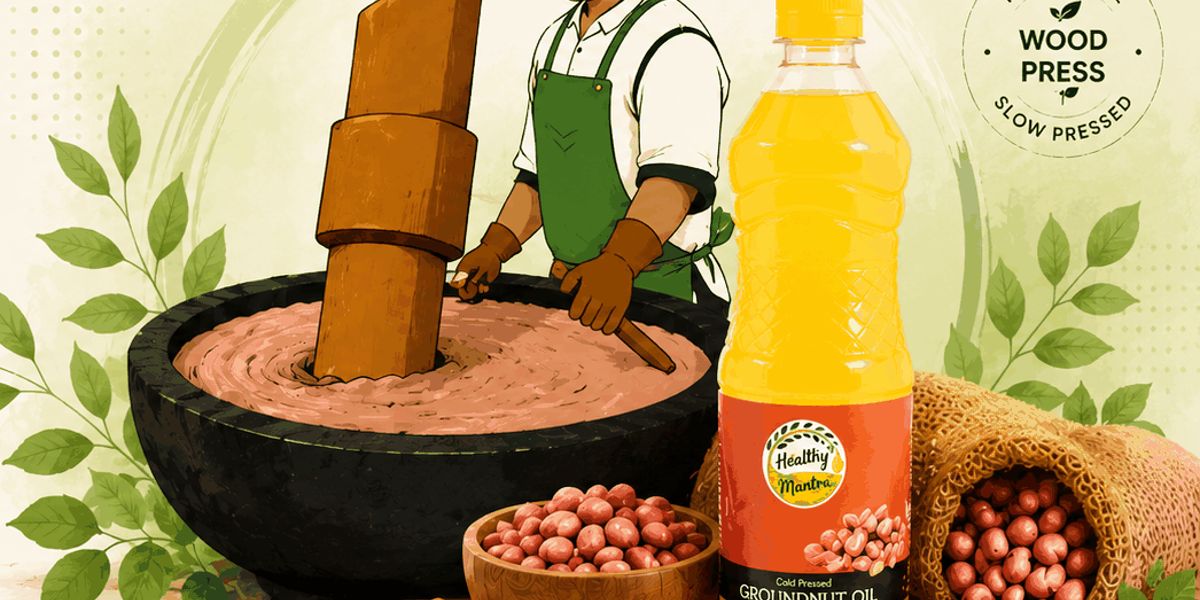
Wood pressed oil — also called kachi ghani, chekku or simply cold pressed — is made the traditional way. Seeds or nuts are crushed slowly inside a wooden ghani that turns at low speed. Because the turning is slow, very little heat builds up, so the oil is squeezed out without any added heat or chemicals. It's then left to settle and filtered through cloth.
Since nothing is heated or chemically treated, the oil keeps its natural colour, aroma and flavour, along with the vitamin E and antioxidants that are naturally present in the seed. That's why a good wood pressed groundnut or sesame oil smells and tastes distinctly of the seed it came from.
How refined oil is made
Most large-brand supermarket oils are made for scale and shelf life. The seed is processed using high heat and often a chemical solvent to extract the maximum amount of oil. That crude oil is then refined — degummed, neutralised, bleached and deodorised — usually at high temperatures.
The result is a clear, odourless, very long-lasting oil that's cheap to produce. But those same refining steps also strip out the natural colour, aroma, flavour and much of the naturally occurring vitamin E and antioxidants. You get a neutral oil — convenient, but stripped of the character of the original seed.
Side by side
| Wood / Cold Pressed | Refined | |
|---|---|---|
| How it's extracted | Wooden ghani, low temperature | High heat and/or chemical solvent |
| Chemicals used | None | Solvents, bleaching & deodorising agents possible |
| Colour & aroma | Natural, retained | Stripped (clear, odourless) |
| Natural vitamin E & antioxidants | Largely retained | Largely removed |
| Flavour | Full, true to the seed | Neutral |
| Shelf life | Shorter — best used fresh | Longer |
| Typical price | Higher (slow, low yield) | Lower (fast, high yield) |
Where does "expeller pressed" fit in?
You'll also see expeller pressed oils. These are pressed mechanically with a high-speed screw press and no solvent — but the speed creates friction, and friction creates heat. So expeller oil is pressed, but it isn't truly "cold." It sits in between wood pressed and fully refined. (We'll cover this in detail in a dedicated guide.)
How to choose when you're buying
A few simple things to look for:
Read the method, not just the front label. Look for "wood pressed," "kachi ghani" or "cold pressed," and a brand that's clear about how it presses.
Trust your senses. Unrefined oils have a natural colour and a real aroma. A perfectly clear, smell-free oil has usually been refined.
Buy fresh, in sensible sizes. Because they aren't loaded with preservatives, unrefined oils are best used within a few months. Store them in a cool, dark place, away from the stove.
Pressed fresh, the traditional way
Healthy Mantra presses every oil in a wooden ghani, in small batches, and bottles it fresh — no heat, no chemicals.
Shop our cold pressed oils →This article describes how oils are made and what each process retains or removes. It is general information, not medical or dietary advice.