There's no single "best" cooking oil for an Indian kitchen — Indian cooking does too many different things. Deep frying, tempering, slow curries, salads, finishing — each asks something different from an oil. The trick is to match the oil to the job.
Match the oil to the cooking
Deep frying & high heat (bhaji, vada, puri): reach for an oil with a higher smoke point, like groundnut oil. It stays stable at frying temperatures and has a mild, pleasant taste.
Everyday sautéing & curries: groundnut, sunflower or safflower oils are light and versatile.
Tempering / tadka: regional favourites shine here — sesame (gingelly) in the South, coconut along the coast, mustard in the North and East. Their aroma is the point.
Salads & finishing: a flavourful cold pressed oil drizzled raw — sesame or mustard — adds real character.
A quick smoke-point guide
| Oil | Character | Best for |
|---|---|---|
| Groundnut | Mild, nutty; higher smoke point | Frying, everyday cooking |
| Sunflower / Safflower | Light, neutral | Sautéing, baking |
| Sesame (gingelly) | Nutty, aromatic | Tadka, South Indian dishes |
| Coconut | Sweet, coastal | Kerala cooking, tempering |
A few tips for the Indian kitchen
Keep two or three oils on hand rather than one — a high-heat oil for frying and an aromatic one for tempering covers most cooking. Buy cold pressed and fresh, in sizes you'll finish in a few months. Store cool and dark, away from the stove, and avoid re-using frying oil many times over.
Stock your kitchen
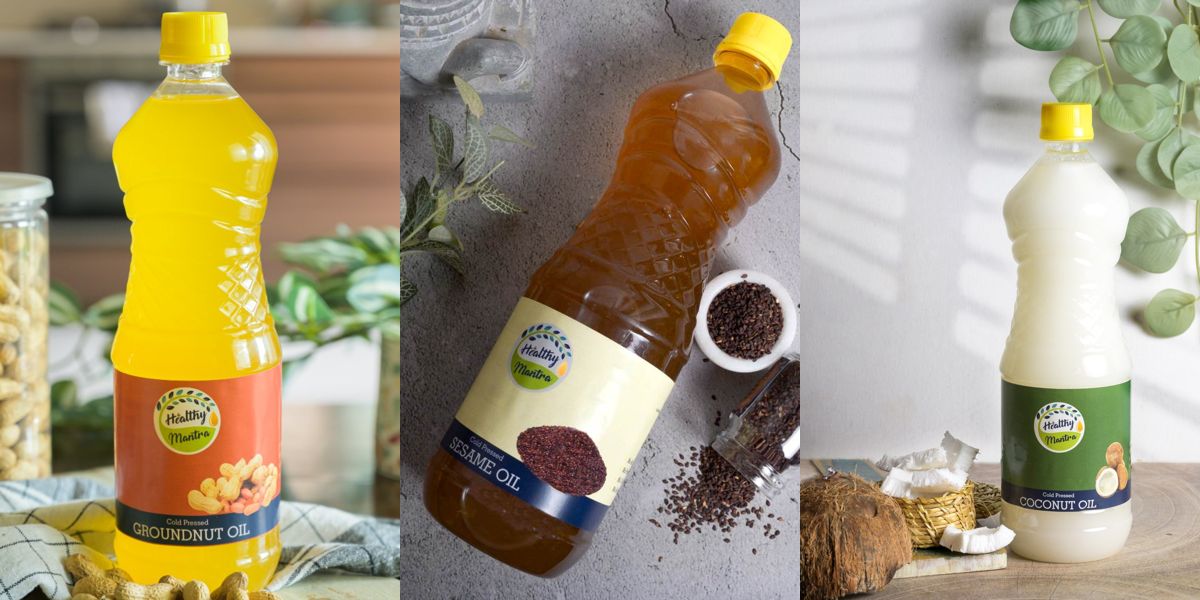
From groundnut to sesame to coconut — wood pressed, fresh, and delivered across Hyderabad.
Shop cooking oils →This article is general information about how oils are made and used. It is not medical or dietary advice.